
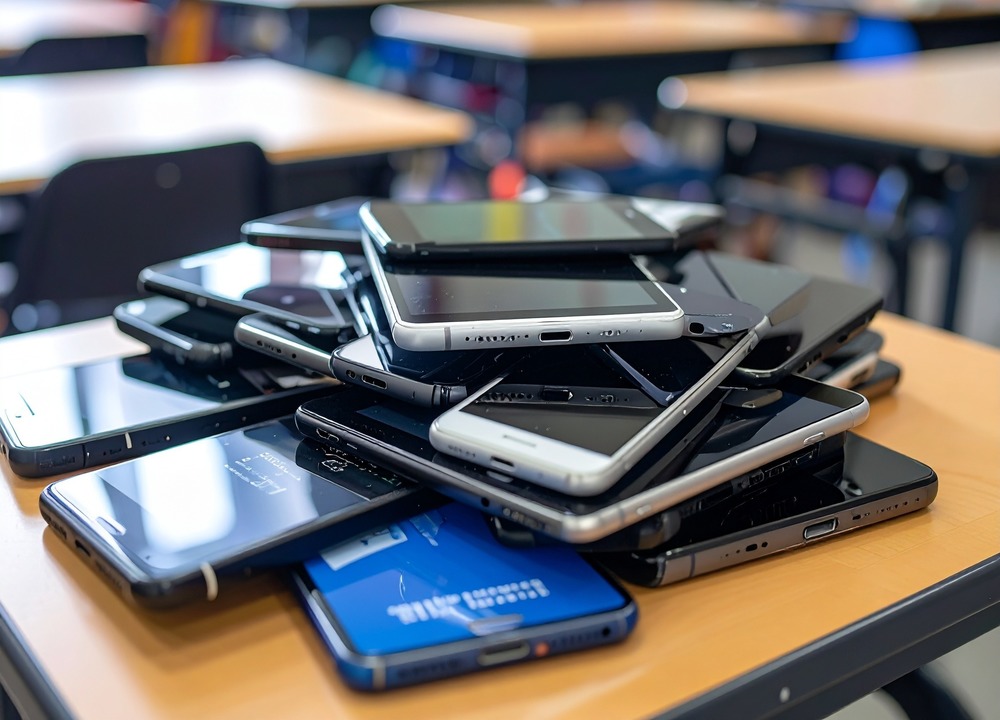
In response to new policies that restrict digital devices in schools, Alpine School District (ASD) gathered extensive feedback to evaluate their impact. Last October, the district sent a request for feedback to all students in fourth grade and up, and also to their parents.
“Cell phones in classrooms are a major concern for parents right now,” said Rich Stowell, director of communications for Alpine School District. “This feedback initiative helps us understand the needs of our community better and engage them in developing the next steps for good policy and practice.”
Asking the Right Questions
To gather robust feedback, the district used a tool that allowed parents and students to share their thoughts via text, voice memo, or video recording. About 4,500 parents and 4,700 students provided feedback.
The survey asked parents:
How have restrictions on cell phones affected your child’s learning?
Do you believe the restrictions create a safer or more respectful school environment? Why or why not?
How have schools been flexible in meeting any special requests or medical related exceptions to the restrictions?
The results are in.
Parents Like the Focus on Learning
Parents are generally supportive of the policies and recognize benefits to students, including increased focus and enhanced learning.
“We are grateful for the rules-based restriction of mobile devices during instructional time,” said one parent of a middle school student. “Our children's moods are more regulate-able, their attention spans are more normal and human, and their quality of learning and absorption is noticeably higher.”
Another parent, who has students in multiple grade levels, said the restrictions have resulted in a better learning environment all around.
“My kids actually listen to the teacher. They’re not just staring at their phone all day. It is so important to restrict cell phone use during school hours so they can respect their teachers and it is a much better school environment,” the parent said.
Governor Cox signed SB 178 after last year’s legislative session, which “prohibits a student from using a cellphone, smart watch, or emerging technology during classroom hours.” In response, the ASD board of education revised policy 5250 to go into effect beginning this school year.
More Transparency and Flexibility Needed
There were also notes of disapproval. Some parents expressed frustration at difficulty getting exceptions for students with special needs, inconsistency in enforcement, and concerns about getting in touch with their children.
“I do worry if there is an emergency at the school, how easily they can access their phone to call home,” said the parent of a high schooler.
The revisions to policy 5250 were meant to find a balance between flexibility and conforming to the requirements of state law. It creates a framework that offers more restrictions at the elementary level and increased freedom in high school. This tiered approach reflected input from educators and families while meeting legislative requirements.
“Parents are our partners in this journey to create the best conditions for student learning,” said Stowell. “As a learning organization, ASD is committed to understanding the impact of its policies to make necessary improvements, even when the feedback is complex,” he said.
Students See Good and Bad
Students also made their opinions known, though they were more mixed. The survey asked them similar questions.
How have the cell phone restrictions affected your stress or anxiety levels during school?
How have the restrictions affected your academic performance and grades?
How have the restrictions been enforced in your school and classes?
Some reported lower grades tied to stress or anxiety without phone access, while a few noted challenges completing assignments that required phone-based tools.
Many reported no change in grades, saying they already focused without phones.
Other students saw improved focus and stronger academic performance.
“I sometimes will get an urge to look at my phone if I am bored but I am way more productive without, obviously,” said one 12th-grade student. “I think I am less stressed because I am getting more work done more often.”
“We hope that students and parents will recognize many of the benefits of phone-free classrooms,” said Stowell. “These policies are designed for them– they are based on research about the harms of smartphones to adolescents and are rooted in a strong desire to give students opportunities to thrive.”
The district views this data not as a final report, but as a roadmap for continuous growth, according to Stowell.